


Table of Contents
How to Sell Digital Products Online: The Ultimate Guide to Passive Income in 2026
To sell digital products online income 2026 strategies require a highly optimized approach that pairs valuable content with smart automation. Imagine waking up to find notifications of sales that processed while you were fast asleep. Selling digital products online remains one of the most viable and highly profitable paths to achieving true financial freedom.
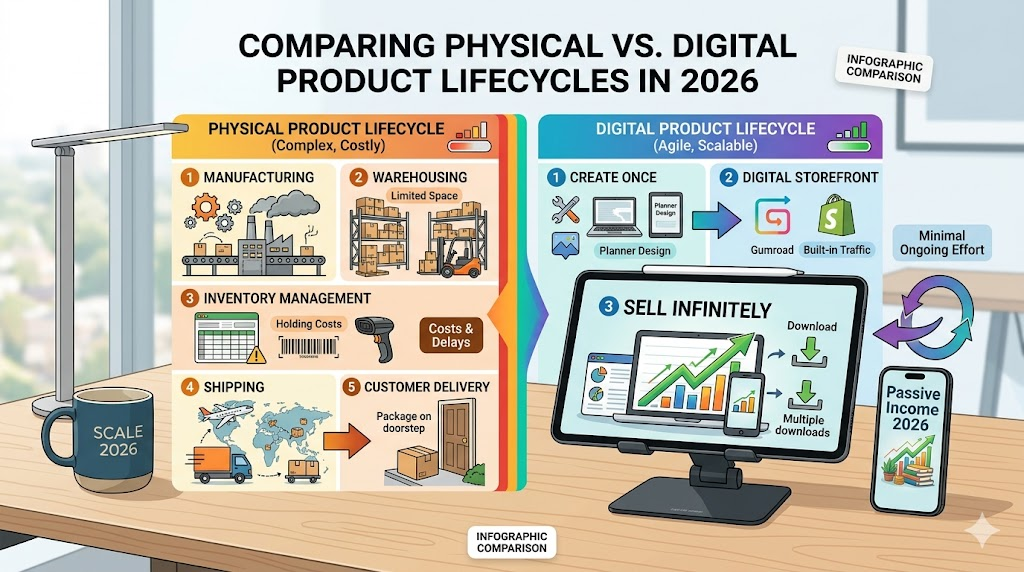
Unlike physical goods, digital assets bypass the headaches of inventory, shipping, and supply chain delays. Once created, a digital product can be sold an infinite number of times with nearly 100% profit margins. Whether you are looking to replace your 9-to-5 or build a highly scalable side hustle, learning the best ways to sell digital products online income 2026 platforms reward will outline your exact roadmap to success.
If you want to sell digital products online income 2026 strategies require, you must focus on highly optimized assets that pair valuable content with smart automation. Imagine waking up to find notifications of sales that processed while you were fast asleep. When you learn how to sell digital products online income 2026 trends support, you tap into one of the most viable and highly profitable paths to achieving true financial freedom.
Why Digital Products are the Best Business Model in 2026
The creator economy has matured, and consumer habits have permanently shifted. Buyers are willing to pay a premium for specialized tools, instant solutions, and structured knowledge.
When you set out to sell digital products online income 2026 potential is unmatched. According to e-commerce industry statistics published by BigCommerce, the global market for digital products is projected to reach a staggering $331.05 billion by 2028, growing at a steady compound annual rate of over 8.5%.
Additionally, research compiled by Behind the Scenes shows that the creator economy itself is valued at $234.65 billion in 2026, with 67% of monetizing creators choosing digital products as their primary baseline revenue stream.
According to e-commerce industry data, several core advantages make this business model highly lucrative:
- Zero Inventory Overhead: You never run out of stock, and you do not need to pay for warehouse storage.
- High Profit Margins: Your only major expenses are your initial time investment and minor platform transaction fees.
- Instant Global Delivery: A customer in Tokyo can buy your product and download it instantly, while you reside in New York.
- Infinite Scalability: Selling 10 copies of a PDF requires the exact same operational effort as selling 10,000.
Most Profitable Digital Products to Sell Right Now
To succeed in 2026, you must solve a specific, painful problem for a targeted niche. Sloppy, generic assets no longer cut it. If you want to successfully sell digital products online income 2026 buyers will pay for, focus on these high-demand formats:
1. Niche Templates and Spreadsheets
Busy professionals and business owners are constantly seeking ways to save time. Customizable templates are massive sellers.
- Google Sheets & Notion Trackers: Financial budget planners, project management boards, and habit trackers.
- Canva Kits: Social media templates for coaches, brand identity kits, and presentation slides.
2. AI-Enhanced Digital Products
According to industry trends highlighted by platforms like Printify, AI assets are highly sought after by content creators.According to digital publishing trends highlighted by platforms like SendOwl, curated prompt collections and AI-ready assets are soaring in popularity as buyers seek faster, more reliable results from their generative AI subscriptions.
- AI Prompt Libraries: Curated lists of highly specific prompts for platforms like ChatGPT, Midjourney, or specialized AI tools.
- Custom GPTs & Micro-SaaS: Lightweight automation scripts, chatbots, and browser extensions that solve niche administrative tasks.
3. Educational Resources
People buy outcomes. If you have specialized knowledge, package it.People buy outcomes. If you have specialized knowledge, package it. According to global learning data compiled by Zoho
, the online education sector has exploded past $200 billion globally, proving that modern consumers are highly motivated to buy structured, self-paced knowledge.
- Micro-Learning Courses: Short, bite-sized video courses targeting specific skills (e.g., “Photography for Short-Form Video” or “SEO for Etsy Sellers”).
- E-books and Audiobooks: In-depth guides on self-help, niche cooking, or business strategies.

Where to Sell Your Digital Products
Choosing the right platform depends entirely on how much control you want over your branding and your customer data.
| Platform | Best For | Pros | Cons |
| Etsy | Planners, printable art, and design assets | Built-in customer traffic and high search volume | High competition and listing fees |
| Shopify | Establishing a fully customized, scalable brand | Complete control over design, pricing, and email lists | Monthly subscription fees; you must drive your own traffic |
| Gumroad / Payhip | E-books, templates, and simple downloads | Quick setup; free-to-use tiers with pay-per-sale commissions | Limited storefront customization |
| ThriveCart / Teachable | Courses, memberships, and high-ticket funnels | Advanced sales funnel building and recurring subscriptions | Higher upfront software costs |
3 Steps to Launch and Scale Your Income
Step 1: Validate Your Idea First
Before spending weeks building a product, make sure people actually want to buy it.
- Keyword Volume: Use keyword tools to search for terms containing “template,” “tracker,” or “guide” with monthly search volumes over 500.
- Social Listening: Scan Reddit, Quora, and Discord communities. Look for common threads where users ask, “Is there a tool or template that does X?”
Step 2: Focus on Presentation and Mockups
Because digital products are intangible, their perceived value is heavily tied to how they are presented. Use tools like Canva to design realistic 3D mockups showing your template or e-book displayed on a physical iPad, laptop screen, or smartphone.
Step 3: Build an Audience and an Email List
Algorithms change, but you own your email list. If your goal is to sell digital products online income 2026 strategies require you to build an asset you control.
- Create a valuable “lead magnet” (a free checklist, mini-template, or workbook) to encourage visitors to sign up.
- Nurture your subscribers with valuable tips, and then pitch your premium digital product as the ultimate solution. When you use email lists to sell digital products online income 2026 conversion rates dramatically outperform social media algorithms.
Frequently Asked Questions (FAQ)
Can I start selling digital products for free?
Yes. Platforms like Gumroad, Payhip, and Ko-fi allow you to list your digital products completely free. Instead of a monthly fee, these platforms take a small percentage commission fee only when you make a sale.
Do I need design or coding skills to sell digital products?
No. You do not need technical expertise. You can use beginner-friendly design platforms like Canva or Adobe Express to build templates and PDF guides, or use Notion and Google Sheets to build functional trackers without writing a single line of code.
How do I protect my digital products from being shared illegally?
While you cannot stop intellectual property theft entirely, you can deter it. Use platforms that support PDF stamping (which automatically pastes the buyer’s name and email on every page) or issue unique software license keys to control access to digital tools.
What digital products sell best?
Currently, customizable spreadsheets (like Google Sheets budgets), Canva templates for social media, niche online courses, and AI prompt libraries are among the fastest-selling digital products on the market.
Is selling digital products still profitable in 2026?
Absolutely. While generic products face high competition, highly specialized niche products—such as tailored templates that solve a specific workflow problem for an industry—continue to command premium prices and yield excellent profit margins.
Conclusion
The barriers to entry have never been lower, and the potential rewards have never been higher. By identifying a specific problem, packaging the solution into a high-quality digital format, and choosing the right platform, you can build an automated system that works for you around the clock.
What digital product idea are you most excited to create first? Let us know in the comments below! If you found this guide helpful, share it with an aspiring creator, and don’t forget to subscribe to our newsletter for weekly tips on scaling your online income.